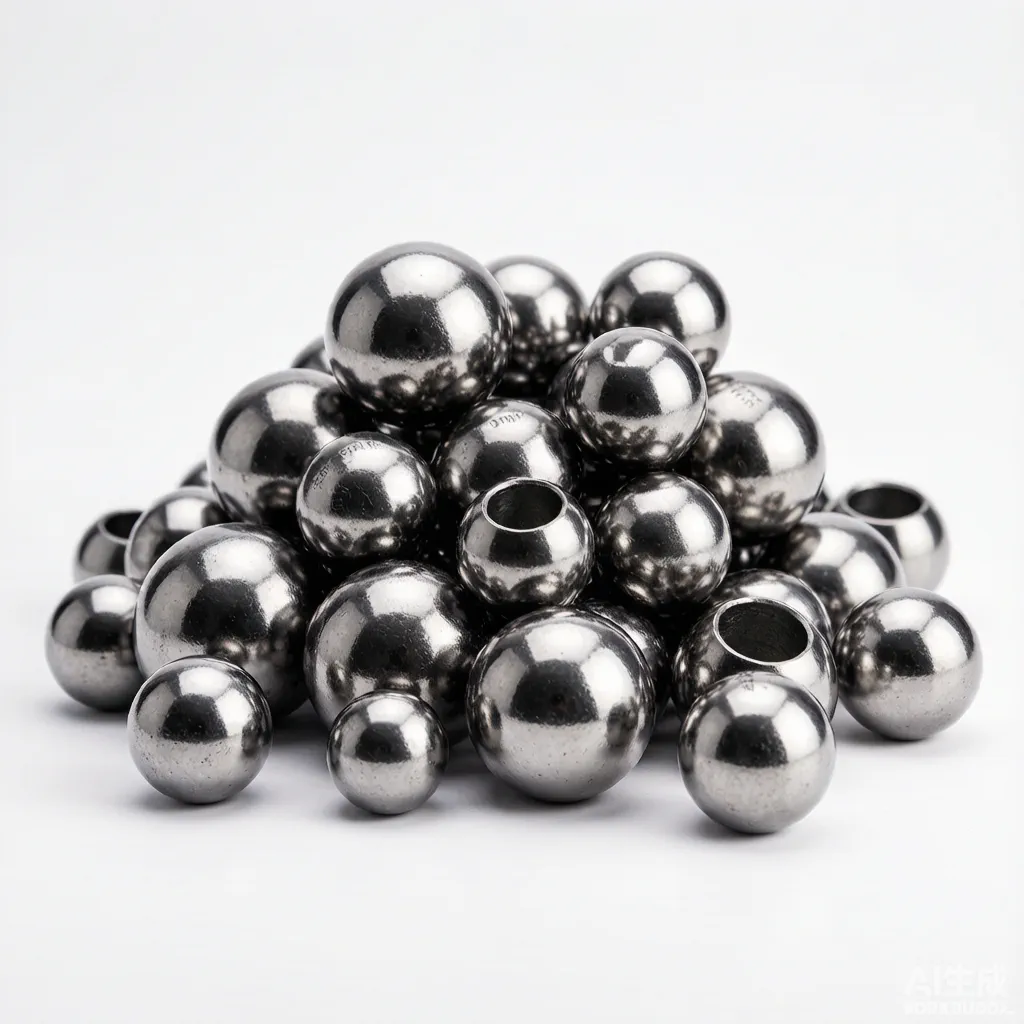
Grinding media is typically the largest single operating cost in a grinding circuit — often 40–50% of the cost per tonne of ground product when energy and liners are counted alongside the balls themselves. Choosing the ball wrong is expensive twice: a ball too soft wears fast and rounds off, a ball too hard (or too brittle) spalls and chips, and both failures contaminate the product and destroy the mill liner life. This guide covers what actually separates good forged balls from cheap ones — steel grade, hardness matched to diameter, and heat treatment — plus sizing the charge, inspecting at source and landing them in the Gulf at a workable cost.
Forged vs Cast Grinding Balls
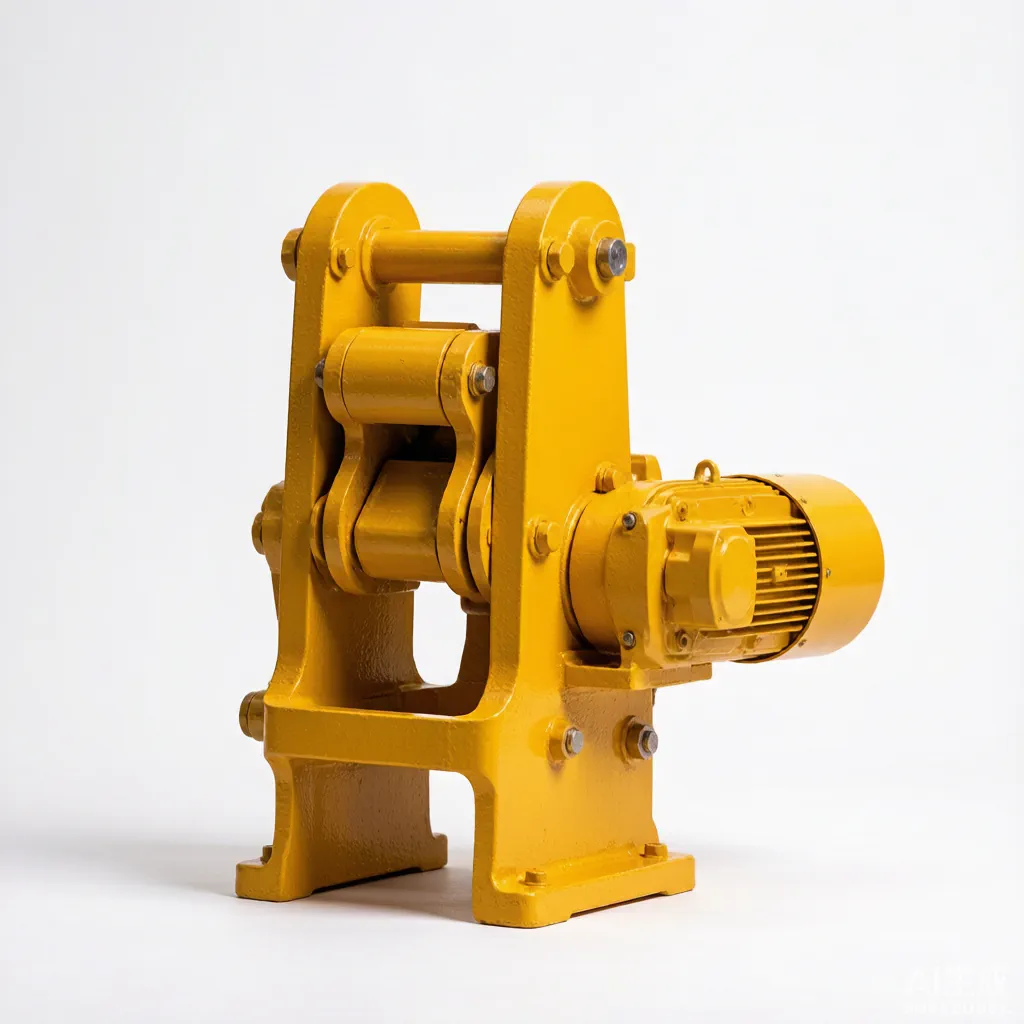
Two manufacturing routes dominate: forged balls are heated steel bars cut to length, pressed in a die and roll-formed, then quenched and tempered; cast balls are poured in moulds from melted scrap or pig iron, then heat-treated. Forging mechanically aligns the grain flow and closes internal porosity, so forged balls tolerate impact better and resist spalling; cast balls are cheaper per tonne and are widely used in cement and coal grinding where impact is mild. Whether your forged grinding balls feed a fixed mill or a grinding stage in a mobile crushing station flowsheet, the route decision below is the same.
The rule of thumb by application: mining (hard ore, large mills, high impact) uses forged steel balls; cement and coal grinding commonly use high-chrome cast balls or cast steel, where the abrasive-but-gentle duty rewards the chrome hardness and the price advantage. For wet grinding of abrasive ore, the choice of forged low-alloy steel versus high-chrome cast media is genuinely economic — both work, and total media cost decides.
When a supplier sells "forged" at cast prices, be suspicious — check the manufacturing route physically: forged balls show a faint die-parting band and a trimmed sprue end, cast balls show mould parting lines and often a gate mark. It is not unknown for cast balls to be sold as forged to price-sensitive buyers, and the difference surfaces months later as spalled media in the mill discharge.
| Attribute | Forged steel balls | Cast (high-chrome / cast steel) |
|---|---|---|
| Impact toughness | High — grain flow survives ball-on-shell impact | Lower — brittle in high-impact duty |
| Hardness achievable | HRC 55–65 surface, gradient to core | HRC 58–68 through hardness (high-chrome) |
| Typical failure mode | Gradual wear to smaller ball (safe) | Spalling and cracking (contaminates product) |
| Price per tonne | Higher | Lower |
| Sweet spot | Mining wet/dry grinding, large mills | Cement, coal, slag, mild-impact circuits |
Steel Grades and Hardness by Diameter
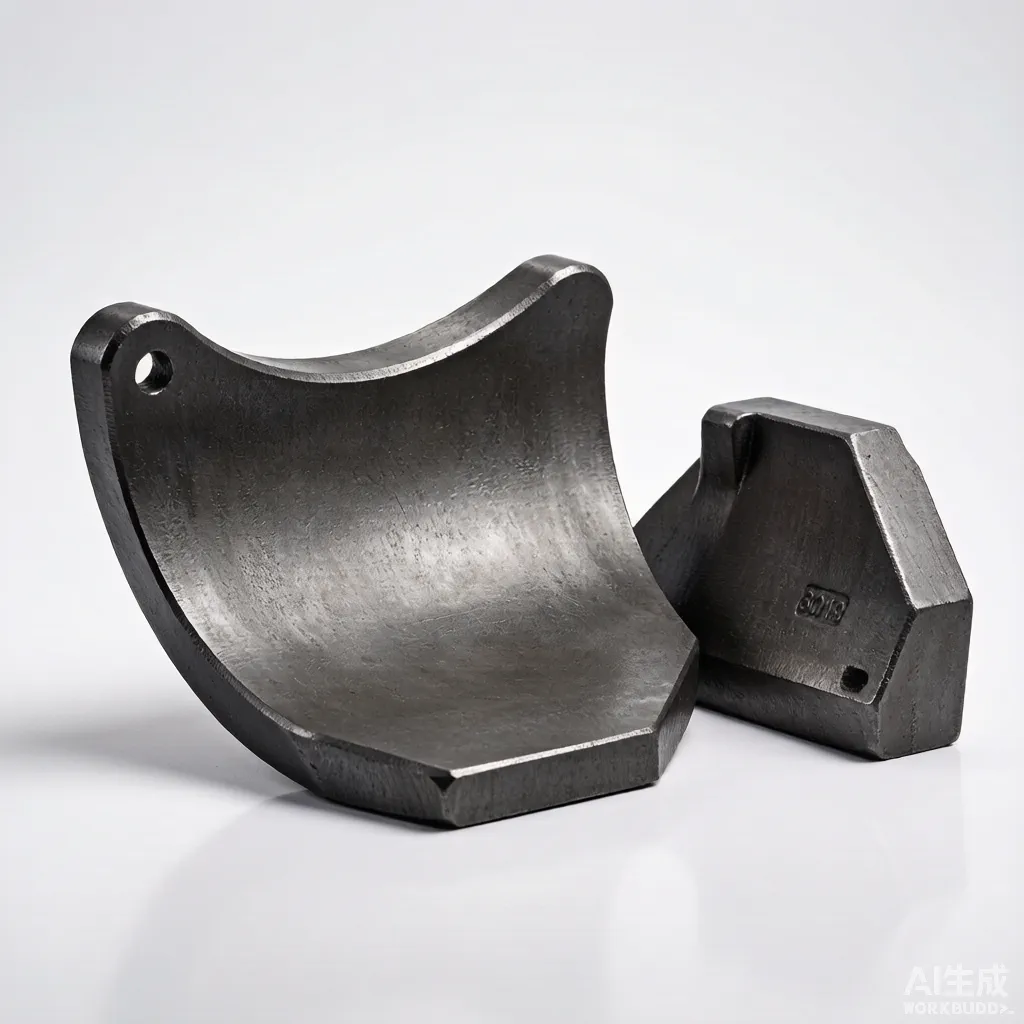
Forged balls for mining come in low-alloy steel families commonly labelled B1, B2 and B3 (broadly 45# to 60# carbon steel with chromium and manganese additions; B3 has the higher alloy content). The grade sets the hardenability ceiling; the heat treatment — quench and temper — sets where in the range the ball actually lands. A sound B2 ball properly quenched outperforms a badly treated B3 every time, exactly as with manganese jaw plates: the certificate chemistry matters less than the process.
The specification that matters is not a single number but the through-hardness profile: surface hardness typically HRC 55–65, with a controlled fall toward the core (10–12 HRC points of gradient is healthy — the tough core is what stops the ball shattering). Hardness must scale with diameter: a 100 mm ball needs more core toughness than a 30 mm ball because its impact energy at fall is an order of magnitude higher. Good suppliers publish hardness-vs-diameter tables; buy from those who do.
For most Gulf-region mining and clinker grinding applications, the working specification is: B2/B3 grade, surface hardness HRC 58–62 for balls 40 mm and above, HRC 55–58 for smaller balls, impact toughness above 12 J/cm² (Ak) on the impact test, and volumetric hardness (the average across the ball section) above HRC 50. Ask for the quench-medium and tempering-temperature record per batch — air-quenched and skipped-temper balls are the quiet killer.
| Ball diameter | Surface hardness (HRC) | Core hardness target | Priority property |
|---|---|---|---|
| 15–30 mm | 55–58 | ≥ HRC 45 | Wear resistance (low impact) |
| 40–60 mm | 58–62 | ≥ HRC 50 | Balance of wear and toughness |
| 70–100 mm | 58–63 | ≥ HRC 52, tough core | Impact toughness first |
| 110–130 mm | 58–63 | Tough core, ≤12 point gradient | No shattering in large mills |
Ball Size and Charge Distribution
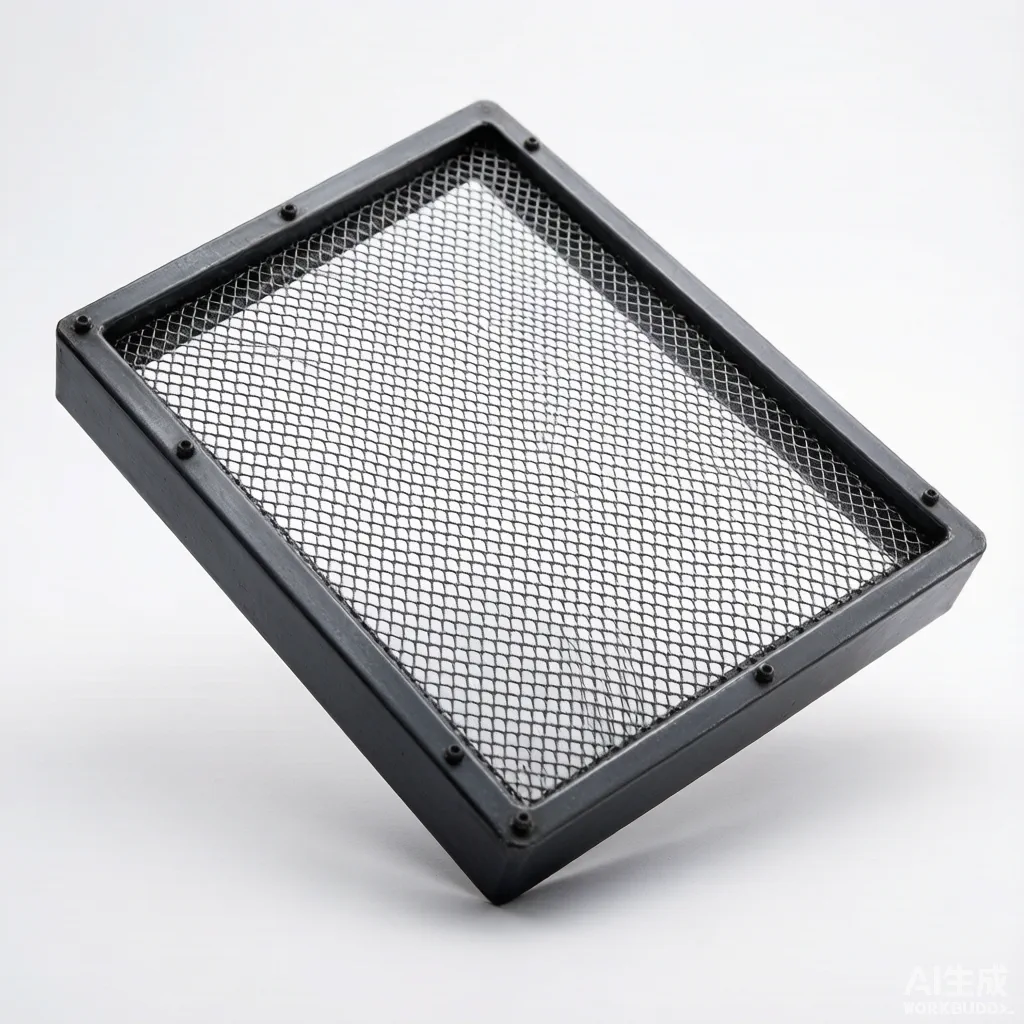
The largest balls set the maximum breakage energy; the smallest set the final grinding fineness; the distribution in between sets the grinding efficiency. A coarse, hard feed needs large media (calculate the Bond-recommended make-up size from your ore work index, feed F80 and product P80) — which is set upstream by how hard your primary jaw crusher works the feed; an over-fine feed charged with oversized balls just wastes impact on already-fine particles and accelerates liner wear. And before the ground product ships to market, vibrating screen media decides how much of it actually meets spec — a grinding circuit is only as good as its classification.
In practice, mills run a make-up charge of the calculated size plus a spectrum downward, and operators replenish with one or two make-up sizes while the worn spectrum self-generates. The classic error is replenishing with a single large size for convenience — the charge coarsens over months, specific energy rises, and the fix (a full re-charge) costs a week of downgraded throughput. Track ball consumption in grams per tonne ground (or grams per kWh) per size class and re-balance the make-up mix quarterly.
Media consumption benchmarks by application (rough, for sanity-checking your own numbers): cement clinker with high-chrome media runs 30–80 g/t; gold and copper ore with forged steel in wet grinding runs 300–800 g/t; abrasive silica-rich ore can exceed 1,000 g/t. If your consumption is far above the band for your ore, the suspects in order are: wrong hardness for the diameter, corrosive slurry chemistry in wet milling (a ball chemistry with higher chromium helps), and undersized make-up media causing surface grinding instead of fracture.
Quality Inspection at Source
Balls are a commodity in appearance and a process-control product in reality — everything decisive is invisible. The inspection package below is what serious buyers require per batch; all of it is standard for Chinese exporters and none of it should be negotiable.
- Melt/heat analysis certificate per batch with heat numbers matched to delivery
- Surface hardness reading on a sampled number of balls per size (HRC, with the test point ground flat)
- Section hardness test on one or two balls per batch: surface, 1/2R and centre points — this is the only proof of the hardness gradient
- Impact toughness (Charpy/U-notch, Ak) report per batch
- Diameter and ovality sampling: tolerance typically ±2 mm nominal, ovality within 2 mm
- Visual: no cracks, no deep scale pits, no quench tears; uniform temper colour
- Batch traceability: heat number painted or stamped per big bag or drum
Packing and Shipping to the Gulf
Forged balls are dense (bulk density ~4.6 t/m³ in a mill charge; ~4.85 t/m³ in drums), which makes them one of the most container-friendly cargoes in heavy industry: a 20-foot container legal payload of 25–27 tonnes fits comfortably in drums or 1-tonne big bags. Big bags load and discharge faster and are the default for mining customers with forklifts; steel drums survive rougher handling and multi-leg journeys.
Standard supply terms are FOB Chinese port with 21–35 days production for repeat orders (balls are rolled continuously and stock sizes move fast) and 18–25 days ocean transit to Jeddah or Dammam. Because SABER conformity for grinding media is straightforward (material certificates, chemistry and hardness in the technical file), certification is rarely the bottleneck — the planning point is ordering the next lot when stock on site reaches one month of consumption, not when the last bags are being cut open.
Consolidation is the money lever: media ships well alongside mill liners and screen media in the same container program, since a grinding circuit rebuild usually needs all three. Buyers who plan the annual media volume and ship full containers on schedule typically land media 10–15% cheaper than spot buyers, with the additional benefit of a single heat-treatment-consistent batch sequence instead of mixed-lot wear behaviour in the mill.
Grinding Cost per Tonne
Price balls on the total grinding cost, not the invoice: media cost per tonne = (ball price × consumption in g/t) plus the liner-wear and energy penalty of running a bad charge. A USD 40/t saving on balls that wear 20% faster is a loss the moment you add the extra mill downtime for re-charging and the extra liner wear from an imbalanced charge.
Run a simple controlled trial before committing an annual contract: charge one mill (or one grinding line) with the candidate media, keep a control line on current media, and measure grams-per-tonne and grams-per-kWh over 8–12 weeks with the same feed. This is a few thousand dollars of effort and it converts supplier claims into your own numbers — the only numbers that matter for a multi-year contract.
When you scale up to contract volumes, expect quoted prices to move with steel billet indices — ball pricing is fundamentally scrap-and-billet pricing plus conversion. Locking a fixed price for a year is possible but carries a premium; most experienced buyers price quarterly against the billet index with a fixed conversion margin. Ask your supplier which index they price against so you can sanity-check every invoice.